
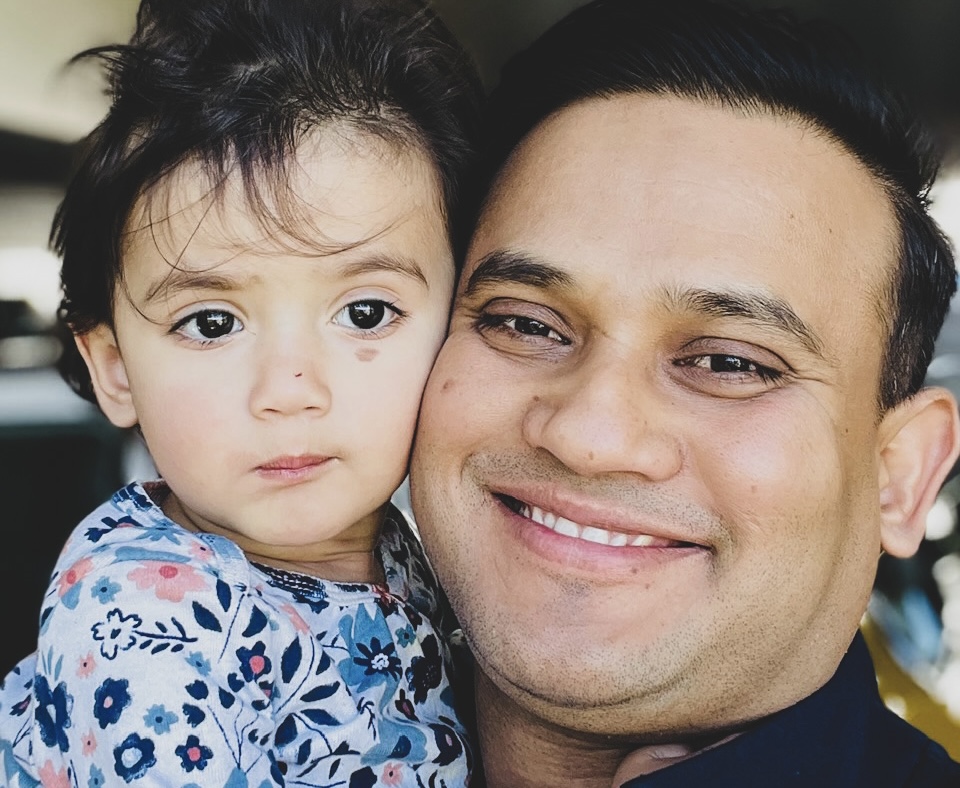
Growing up in a rural village in India, I have a lot of memories that shaped my childhood and life. However, one experience that has left a lasting impression on me is the issue of racism in India. As a child, I was very curious about life, God, and the world. I used to read a lot of books, and one of my favorite writers was Sunil Gangopadhyay. Reading books made me curious to write. I don’t remember the age when I started writing, but I believe it was when I was around 12 years old. I remember when my first poem was published in our school’s yearbook. I was very happy and excited. I had a notebook where I used to write my poems, and I wrote many of them. Unfortunately, my book was eaten by termites, and I stopped writing poems and started writing about my day-to-day life in a diary.
I wanted to be a writer when I was a teenager, but life has its own rules. I was poor in English, not good in Hindi, and even very bad in Bengali, even though we are considered Bengali. Our state is Tripura, and the Bengali we speak is different from the Bengali we read in books and the pure Bengali of Kolkata (West Bengal). People from other states, especially from West Bengal, make fun of Tripura’s Bengali. That’s the main reason a lot of people from Tripura teach their kids Kolkata’s Bengali. Even though they learn it, native Kolkata people still catch their language and make fun of them. They say that Tripura’s people speaking pure Bengali are like a crow wearing a peacock’s feathers.
Racism in India is not limited to linguistic discrimination. There are also instances of discrimination based on skin color, religion, and caste. Although there have been efforts to eradicate these issues, they still persist in various forms. A survey conducted by the Indian Council of Social Science Research (ICSSR) in 2017 found that 27% of Indians admitted to discriminating against others based on their caste, religion, or ethnicity.

In my own experience, I once witnessed an incident of racism towards a tutor who used to come to our home to teach me science and mathematics. He was born in Bangladesh and came to Tripura, where he was living with one of his aunts. As a tutor and a human being, he was awesome, and I still respect and love him.
One day, I had a math exam, and while practicing at home, I got stuck on a theory. I ran to his room and sat on the stool where he taught other students. He helped me, and I was happy and went back home. However, on the way back from school, I noticed all of his furniture, clothes, and everything else were outside his room. I thought they were preparing for a festival or something else. I saw his aunt by the road, and she asked me to stop. I could tell that she was super mad. She said, “Why did you enter his room? You don’t know he eats and sleeps in that room! Do not do it again. I had to clean and wash his entire room.” I was shocked and very sad, and I almost cried.
That incident didn’t change my respect for him, but it left a seal in my heart. It was not something new for me, but I did not expect something like that from my tutor, who used to come to our home and teach me science and maths. It was a reminder that even people who seem to be good and kind can be racist.
The issue of racism in India is deeply rooted in the country's history and social structure. It is a complex issue that requires a multifaceted approach to address. It involves education and awareness campaigns, as well as legal and policy changes to promote equality and justice. It also requires individual efforts to challenge and confront discriminatory behavior and attitudes. While progress has been made in India to combat racism, there is still a long way to go to achieve a truly inclusive and just society. It is up to all of us to work towards this goal and create a better future for all.




💬 Discussion (0)
Be the first to share your thoughts!
Leave a Comment